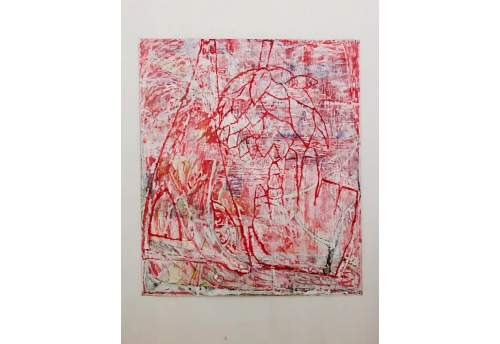
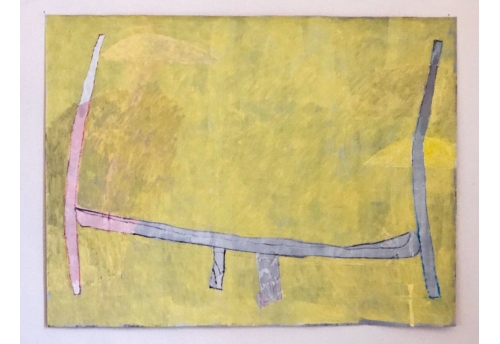
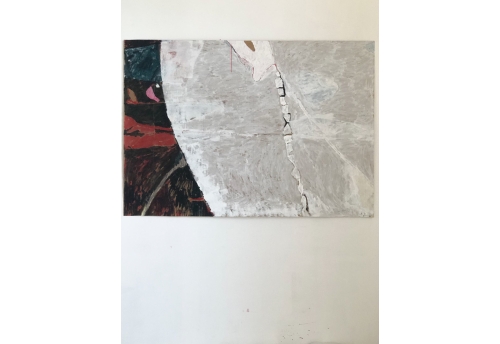
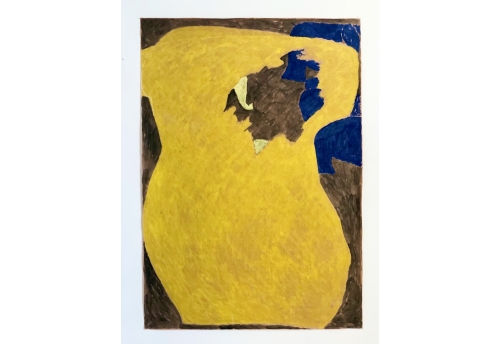
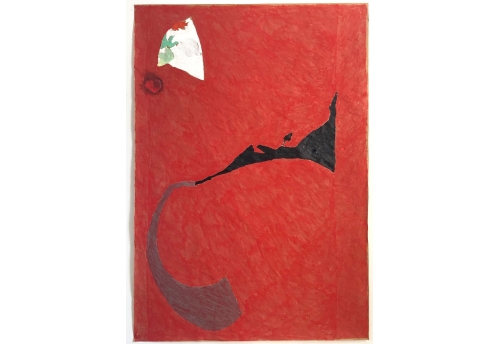
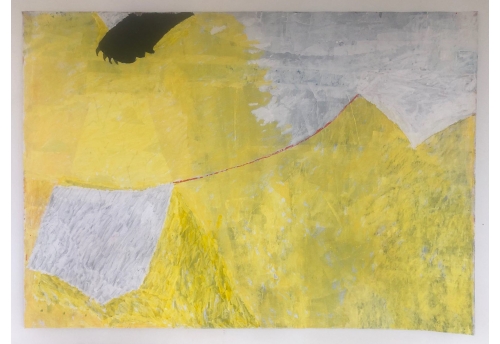
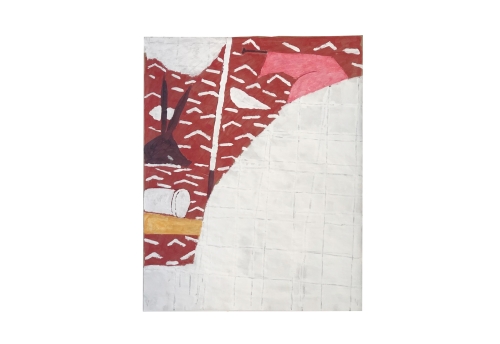
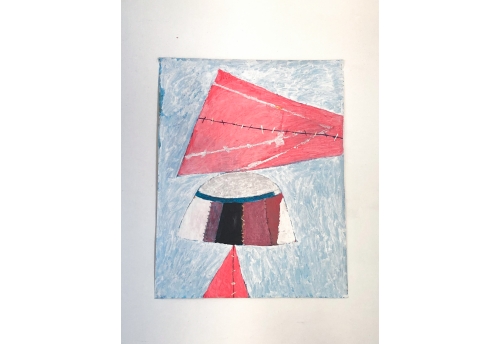
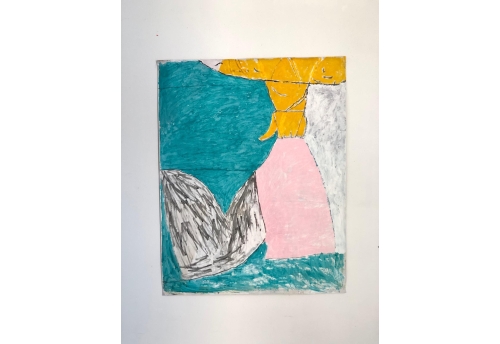
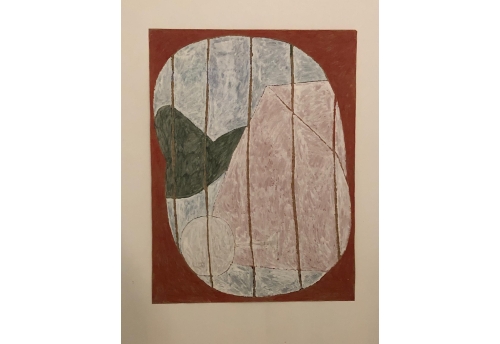
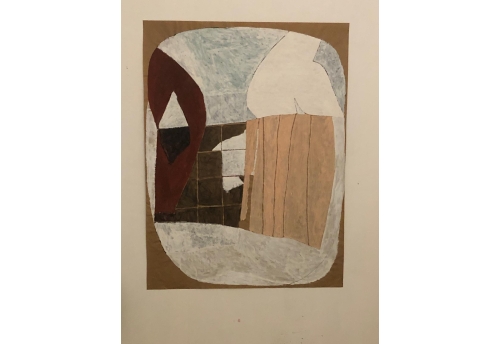
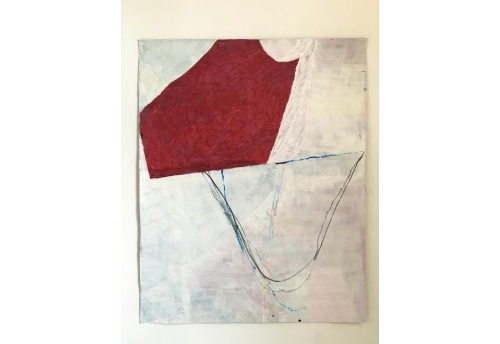
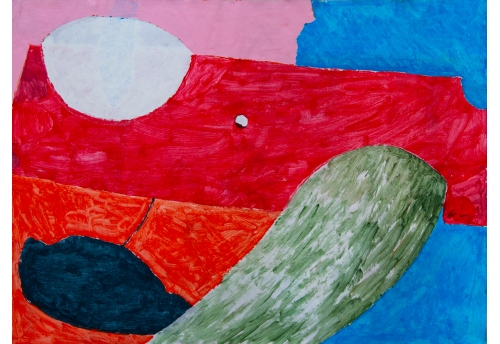
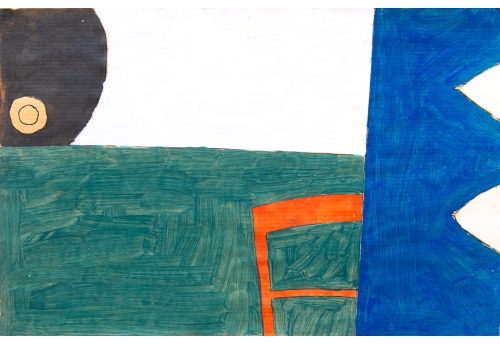
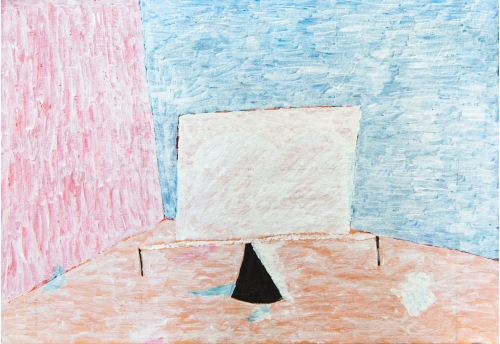
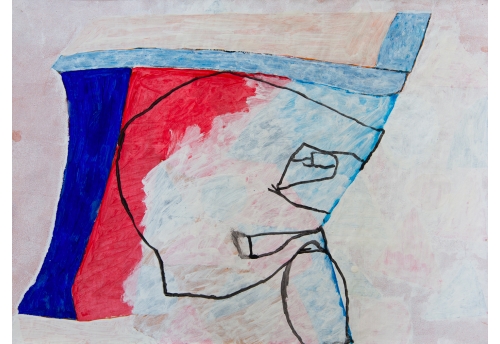
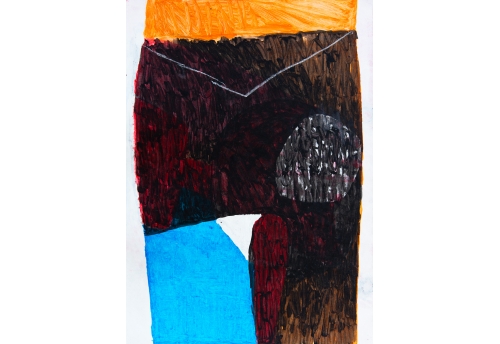
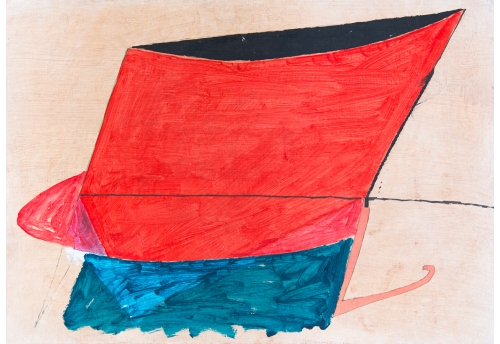
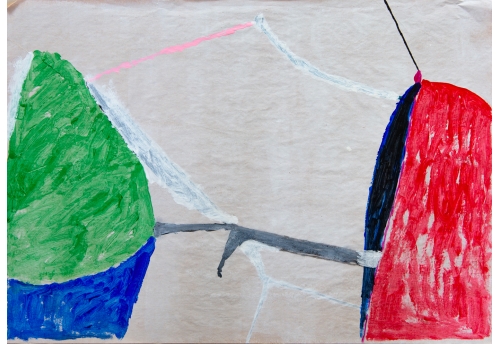
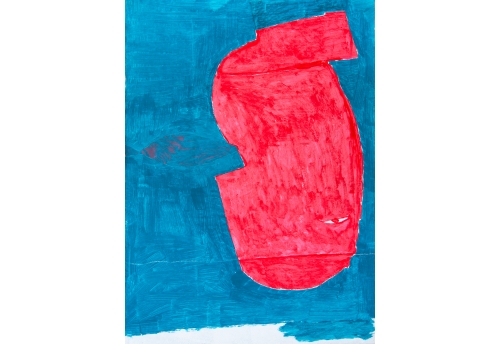
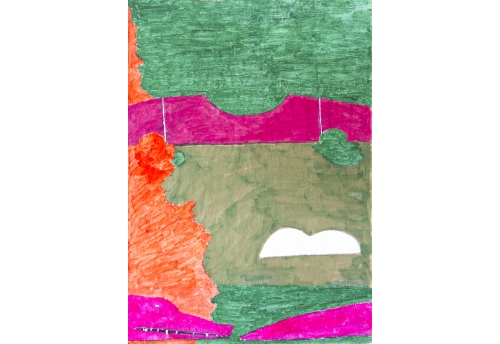
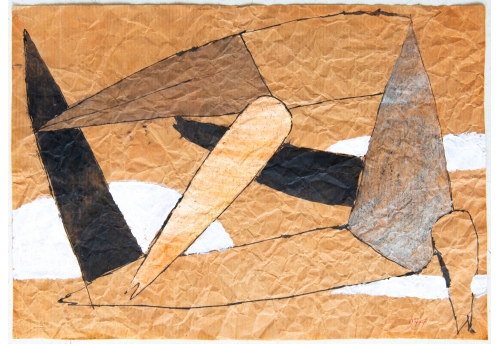
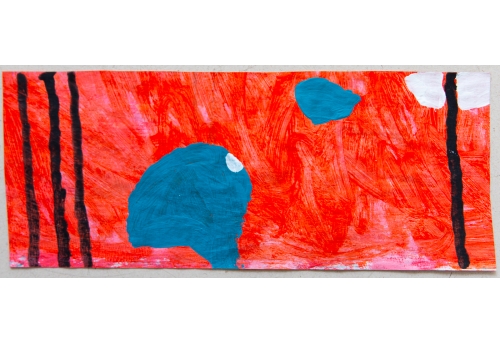
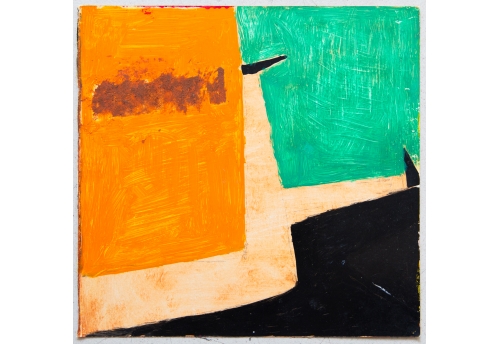
Pierre-Yves Canard is a collector, partly of paintings he admires in others’ collections (citations and playful nods are never lacking), partly of paintings he would like to see in others’ collections but cannot find. So, he paints them himself.
As a collector, he is also invested in the subjects he places on his canvases: numerous subjects, titles, and captions that evoke a world reminiscent of Raymond Roussel. Examples include Fauteuil, L'entomologiste, Tintin, Le crocodile captif, L'égyptien sans peine, Comment multiplier vos plantes d'intérieur, Orlando, Chat Botté, Un peu fort de café, Cerf ! Ouvre moi !, Le naturel n'est qu'une pause parmi tant d'autres, La pêche au gros, St Sébastien au citron, Une place pour chaque chose, Déberlinoir, La mythologie pour tous, …
In The Order of Things, Michel Foucault mentions a “certain Chinese encyclopedia” imagined by Borges, which has “the exotic charm of another way of thinking, (…) shaking and unsettling for a long time our millennia-old practice of the Same and the Other.” Its taxonomy enumerates the animal world as: “a- belonging to the Emperor, b- embalmed, (…) d- suckling pigs, (…) i- that run around like madmen, (…) k- drawn with a very fine camel-hair brush.” The categories are conceivable in their singularities, but the inventory as a whole defies thought and makes it practically impossible. Not because of the proximity of the unusual encounters it provokes, nor the “proximity of extremes or unrelated things”… No, what is impossible is the site itself where they could exist. And precisely…
For the collector, the painting is the privileged site for the coexistence of these antithetical singularities and the attempt to organize them: each canvas or drawing systematically falls into a theme, sometimes intersecting or overlapping. These themes are not treated in linear order, as variations of a series, and the elements are not fragments or parts of a whole. They exist for themselves, coming from different periods and styles. There is no intent on the collector’s part to deepen, to work in hollowed layers, or to exploit a plastic or literary idea.
Tortue et tatou and other Chameleons, barely entered into the canvas, seem ready to leap out, already halfway outside. It is also in this springy quality—between these two indistinct moments of entry and exit—that the temptation of fable arises, barely appeared, already gone. Yet the refusal of narrative is categorical!
The subject is firmly anchored in the space of the painting, yet it floats, remaining suspended. The collector’s intention is clear in what he shows: the sense of suspension created in part by a certain ambiguity.
“Ambiguity,” says the collector, “is the only way to break the conventional, habitual recognition we maintain with things, phenomena, and people. It is also the only way to suggest the interior, by showing the space between two elements, between two possibilities.”
And also:
“I hardly believe in experience; the little we know is stamped into us like a seal.”
There is little desire to seek information, knowledge, or to create, but rather the desire to reassemble a puzzle.
This approach can be compared to that of Marguerite Duras’s son: “I no longer want to go to school because they teach things there that I do not know.”
— Christiane Cavallin Carlut, October 2005