Remember Me
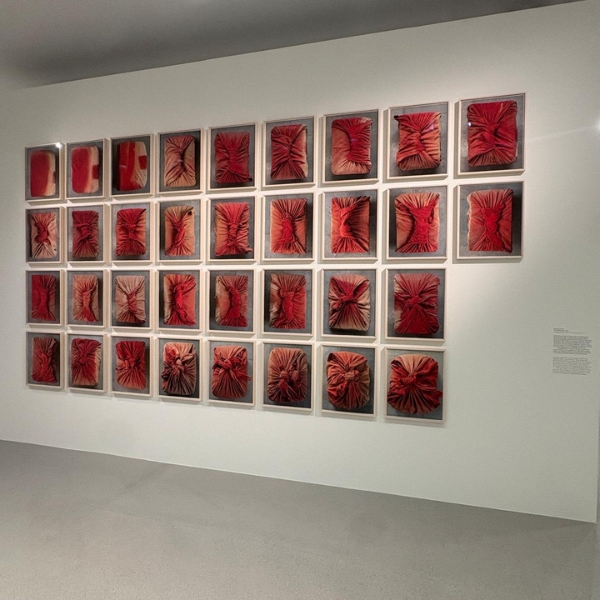
We enter Remember Me as though stepping into an immense album of memories whose pages have been shuffled. At the Bourse de Commerce, photographs echo one another, contradict one another and overlap, forming a vast landscape of images in which the face, the body, the place and the moment become different ways of holding on to something before it disappears. To celebrate the bicentenary of the invention of photography, the Pinault Collection brings together nearly 700 works, transforming the building into a veritable chamber of echoes.
From the very first rooms, a question begins to take shape: what does a photograph truly seek to preserve? A face, an event, an era, an emotion? Or simply the fragile proof that something once existed? The works gathered here seem to revolve around this very obsession. To photograph is to stop time, but it is also to acknowledge that, despite everything, time goes on.
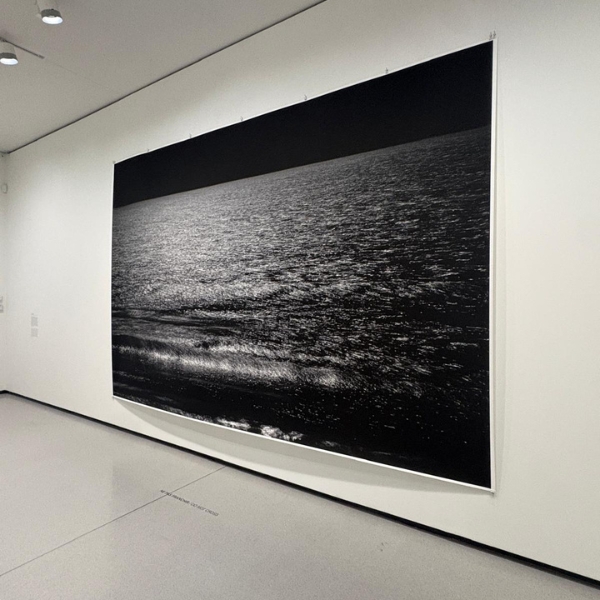
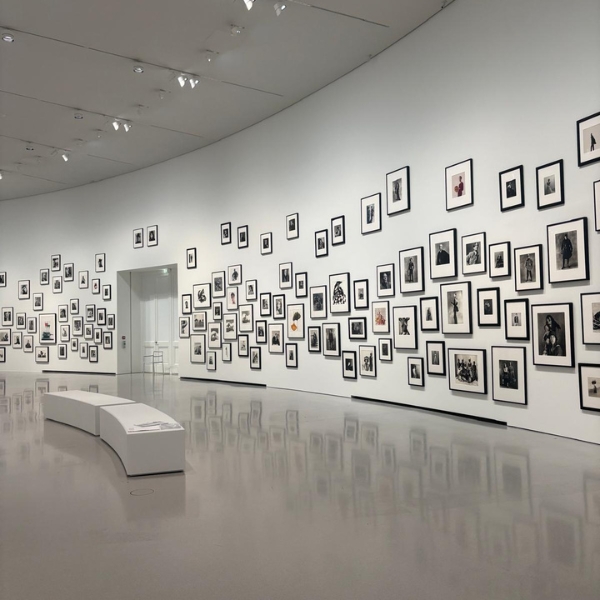
Some images strike us with their immediacy. A gaze, a posture, a landscape are enough to conjure an entire story. Others demand more time. At first, they seem almost silent, only to resurface in the mind a few minutes later. The exhibition constantly plays with photography’s unique ability to transform a fragment of reality into a memory.
Yet the diversity of the works resists any single interpretation. There are intimate, political, documentary, strange, and sometimes almost absurd images. Some photographers use the body to explore identity, while others delve into memory, disappearance, or the construction of narrative. Photography emerges not merely as a means of depicting the world, but as a way of shaping it.
And then there is Barbara Kruger, whose monumental installation lends the exhibition an almost spectacular dimension. In her work, words disrupt images and compel viewers to become aware of their own gaze. We are no longer simply looking at a photograph: we ourselves become the object of scrutiny, addressed directly and placed at the heart of an installation that challenges the way we consume images.
As we move through the exhibition, a sense of melancholy begins to emerge. All these photographs sought to hold on to something, yet they constantly remind us that nothing can be preserved forever. Faces grow old, places disappear, events become history. Even the image, meant to preserve the present, eventually becomes a trace of the past.
It is this paradox that gives Remember Me its power. The exhibition is about photography, but above all, it speaks to our almost instinctive need to leave a mark. We take photographs to remember, to be seen, to tell the story of who we are. And standing before these hundreds of images, we begin to understand that photography may be less an art of memory than an art of disappearance: a beautiful, fragile way of asking time not to erase everything.