



Helene Schjerfbeck’s exhibition
The exhibition of Helene Schjerfbeck at the Metropolitan Museum of Art in New York is a quiet revelation a journey to the very edge of seeing that finally establishes this Finnish icon on the American stage. In the Met’s hushed galleries, her paintings act like magnets, drawing visitors in through an economy of means that borders on the sacred. Schjerfbeck does not paint faces; she paints the imprint life leaves on the soul. Her work is a lesson in reduction: as time advances, the pictorial matter thins, until only a vibration, a breath, an almost spectral presence remains on the canvas.
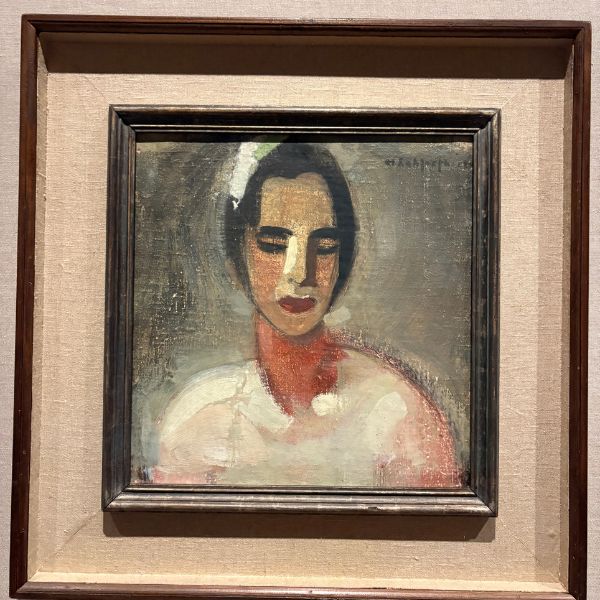
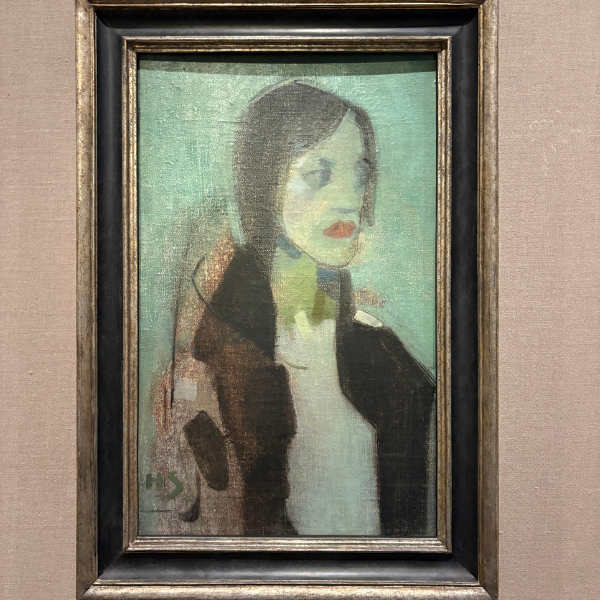
The exhibition traces the fascinating evolution of an artist who, though physically isolated in the Finnish countryside, remained radically modern. Visitors encounter her early naturalist masterpieces, dazzling in their technical mastery, before the work shifts into the stylized introspection that would define her legacy. Her portraits often women from her circle or self-portraits are stripped of all artifice. Features fade away, mouths become mere lines, eyes hollowed shadows, yet the psychological intensity is profound. She captures a universal solitude that Louise Bourgeois explored through sculpture; Schjerfbeck achieves it through colormuted tones, off-whites, faded pinks that seem worn down by time itself.
The series of late self-portraits forms the beating heart of the exhibition. It is a brutal and magnificent confrontation with aging and disappearance. Schjerfbeck observes herself without indulgence, documenting the erosion of her own features with a rigor that commands respect. The face becomes a mask, then a simple luminous stain in the dark. This is a painting of resistance a hand-to-hand struggle with nothingness, where every brushstroke is an affirmation of existence. The Met succeeds in showing how an artist, by withdrawing from the world, managed to paint its most naked truth.
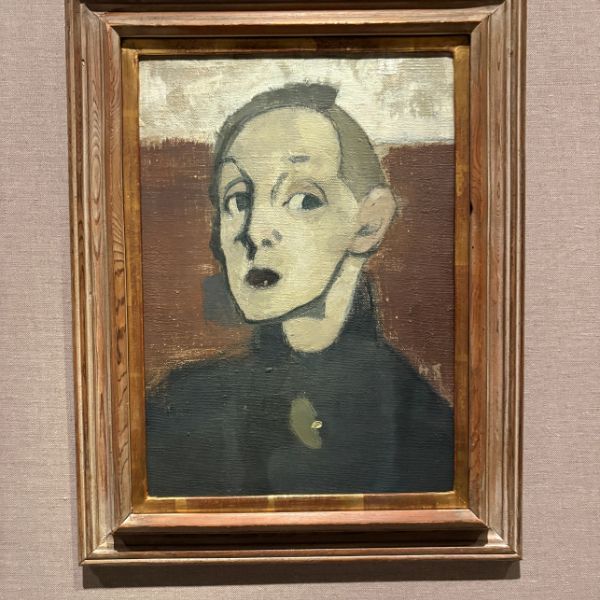
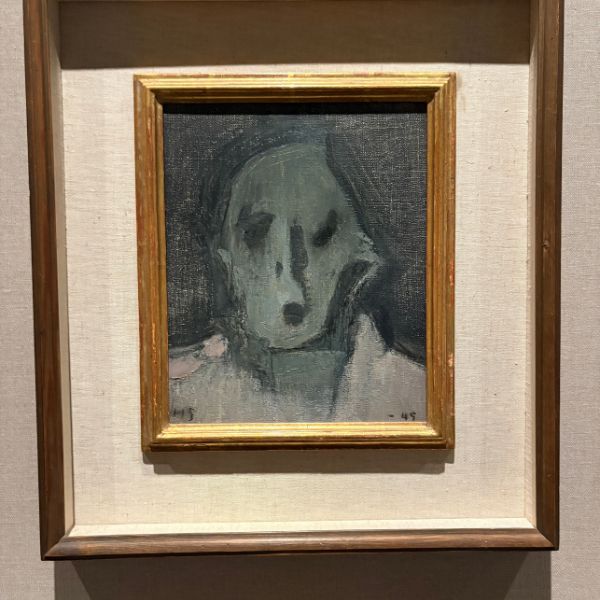
This exhibition is a necessary experience of contemplation. Amid the tumult of New York, Schjerfbeck’s work imposes a cathedral-like silence. One leaves these rooms with the feeling of having touched the very essence of what it means to be human: a fragility that is, paradoxically, our greatest strength.