


Carol Bove: The Poetics of Steel at the Guggenheim
The Approach: Defying Rigidity
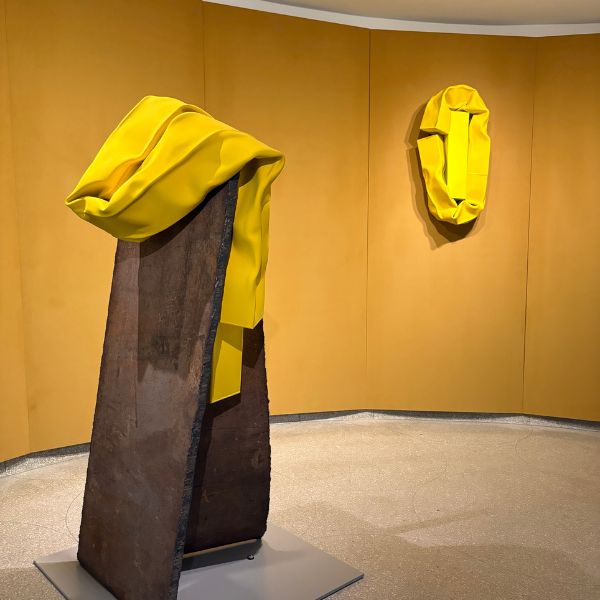
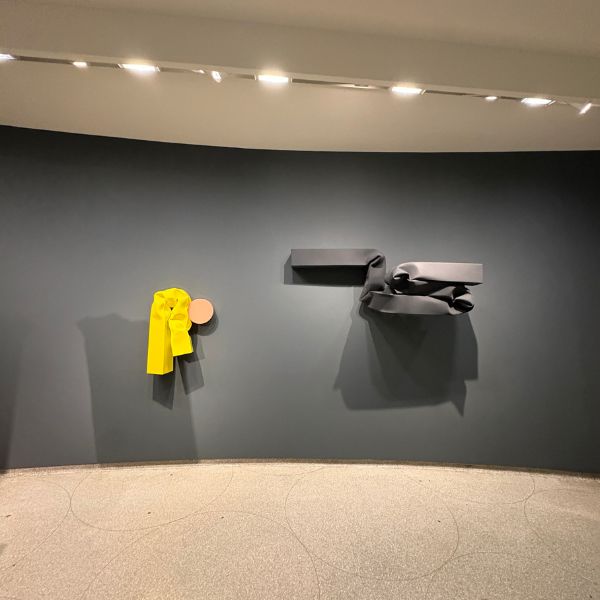
The walk begins with a confrontation with matter. Carol Bove is renowned for her ability to treat industrial steel as if it were modeling clay or fabric. Her practice rests on a paradox: using heavy, cold, and rigid materials—often Corten steel beams or crushed pipes—to create forms that evoke suppleness, folds, and organic movement. She explores the tension between the raw resistance of metal and the apparent fragility of the final form.
Looking closely at her sculptures reveals her technique of “sculptural collage.” Bove salvages elements of industrial scrap, combining them with sections of steel bent using high-power hydraulic presses. These “folded sculptures” retain the memory of the violence of their transformation while displaying an almost baroque elegance. Viewers are invited to move around the work, observing how light catches matte or reflective surfaces, revealing textures that oscillate between mirror polish and deep rust.
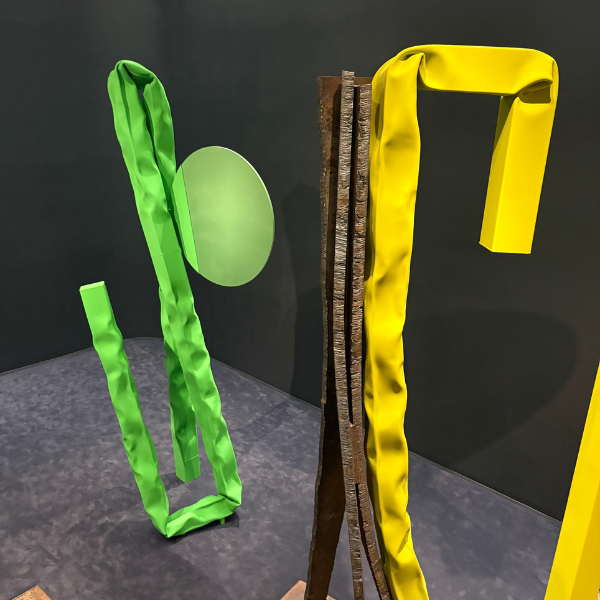
The Scenography: A Dialogue with Wright
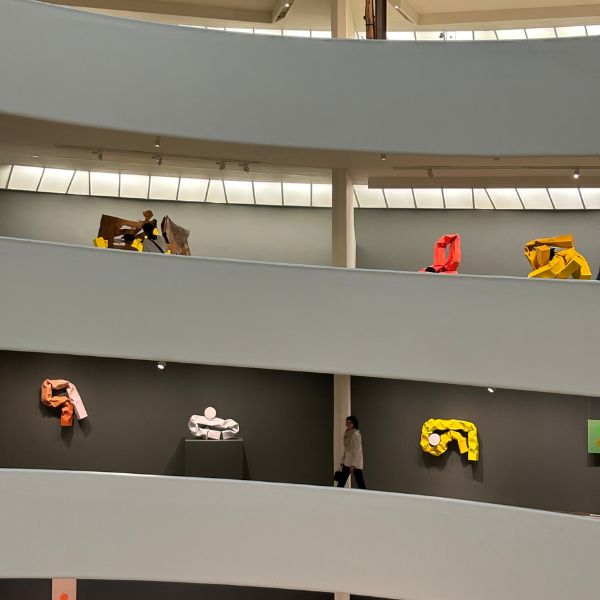
The magic of this walk lies in the interaction between the artworks and Frank Lloyd Wright’s helical architecture. Unlike a conventional gallery, the Guggenheim’s installation uses ramps and alcoves to create cinematic viewpoints. The walls have all been repainted, subtly evolving as visitors ascend the spiral.
This exhibition is more than a presentation of objects; it is a lesson in poetic physics. Carol Bove succeeds in humanizing industry, transforming the Guggenheim into a garden of metal where each fold of steel tells a story of strength and softness. It becomes a sensory experience in which the weight of the world, for the duration of the climb, turns into a fascinating lightness.