


Les Peintures du Temple
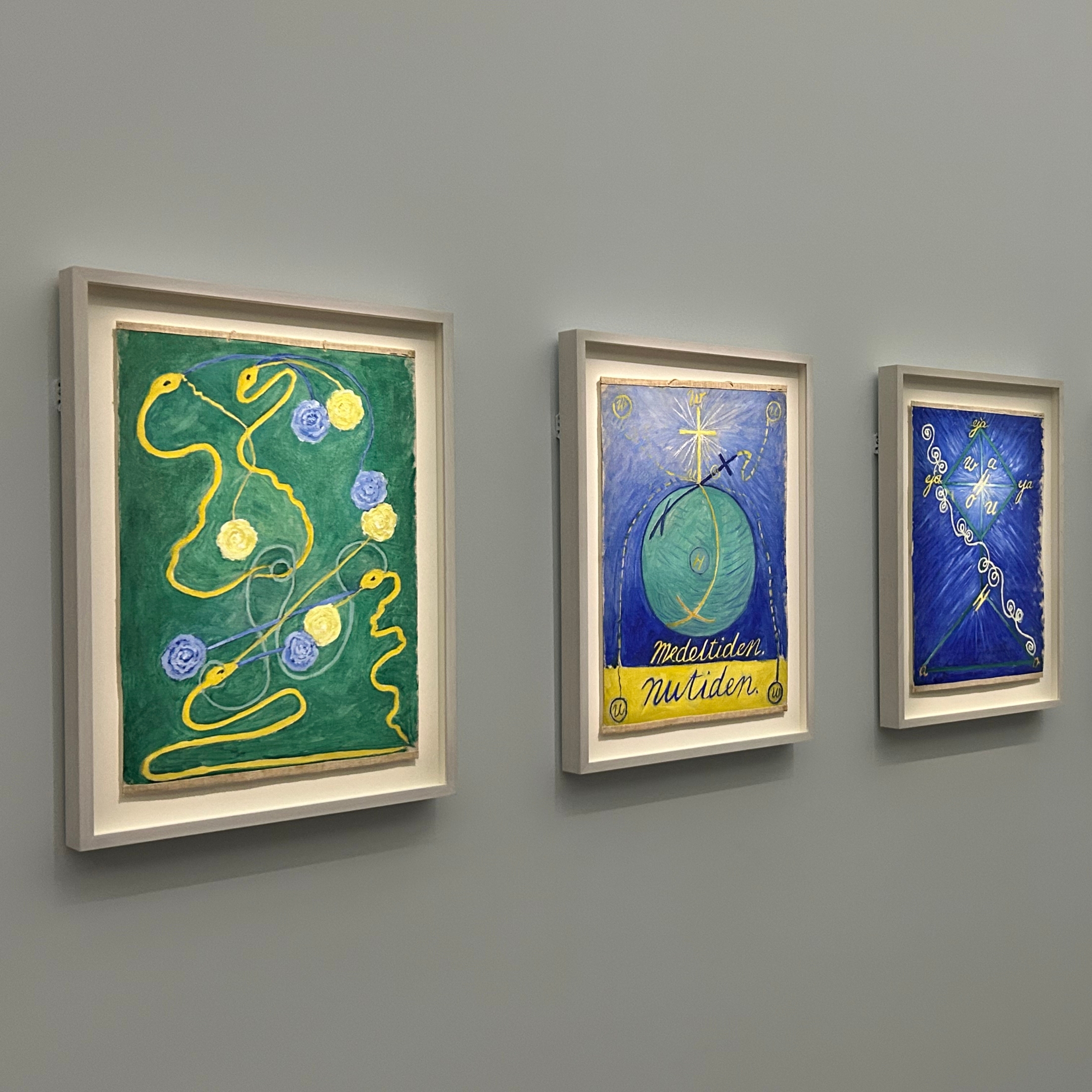
The tour begins in the shadow of a double life. Hilma af Klint, trained at the Royal Academy of Fine Arts in Stockholm, pursued on the surface a figurative career that conformed to the expectations of her time. But behind this impeccable façade, in absolute secrecy, she was producing work of unprecedented boldness, nourished by Theosophy, spiritualism, and a profound conviction that art could capture the invisible forces governing the cosmos.
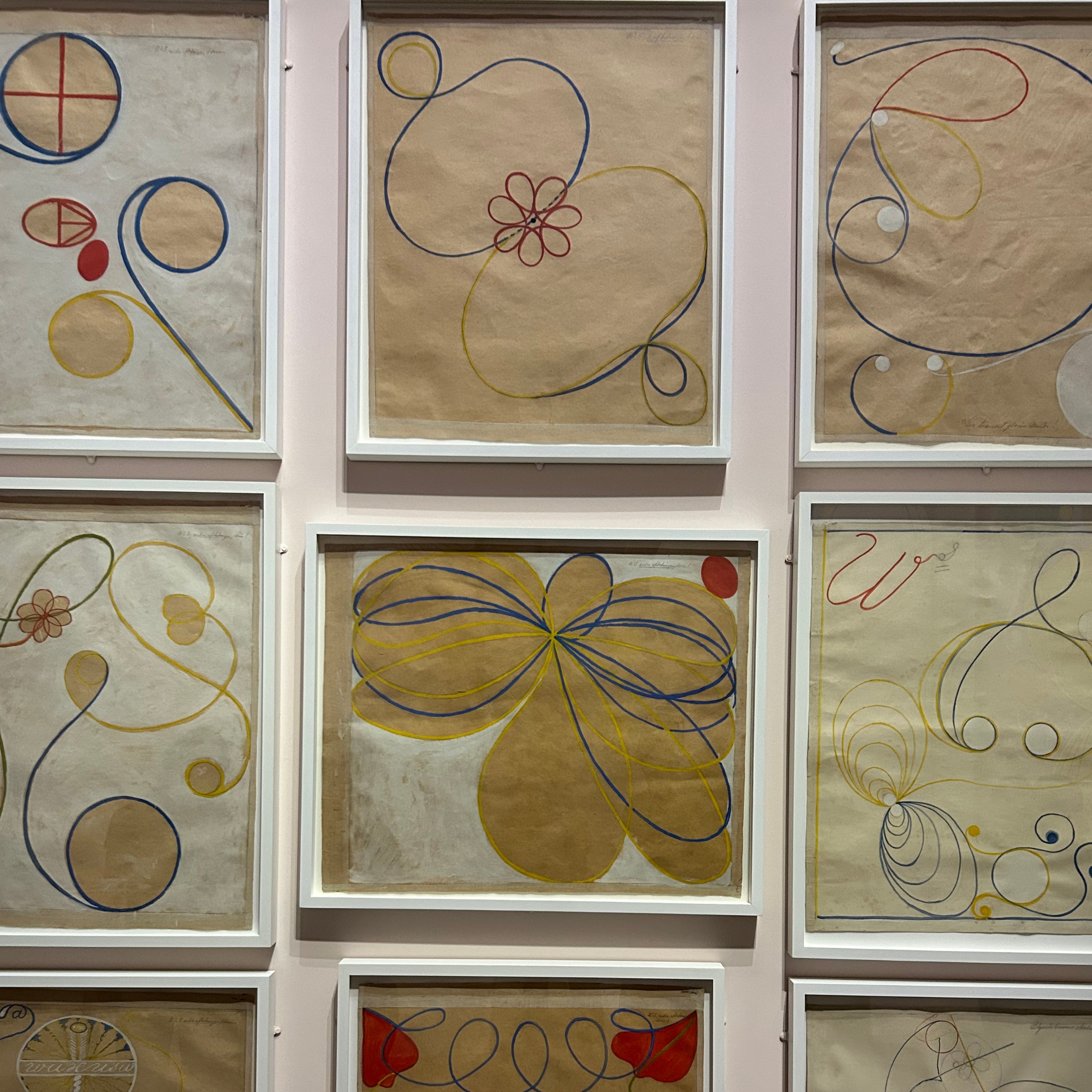
As early as 1906, well before Kandinsky or Malevich, she developed an entirely abstract pictorial language. Spirals, circles, bursts of vivid colour: her compositions depict nothing familiar, and yet they carry meaning. The viewer is struck by the particular tension between geometric rigor and organic exuberance, between the coolness of the diagram and the warmth of an inner vision. Hilma af Klint does not describe the world; she transcribes its hidden harmonies.
The Great Work: The Paintings for the Temple
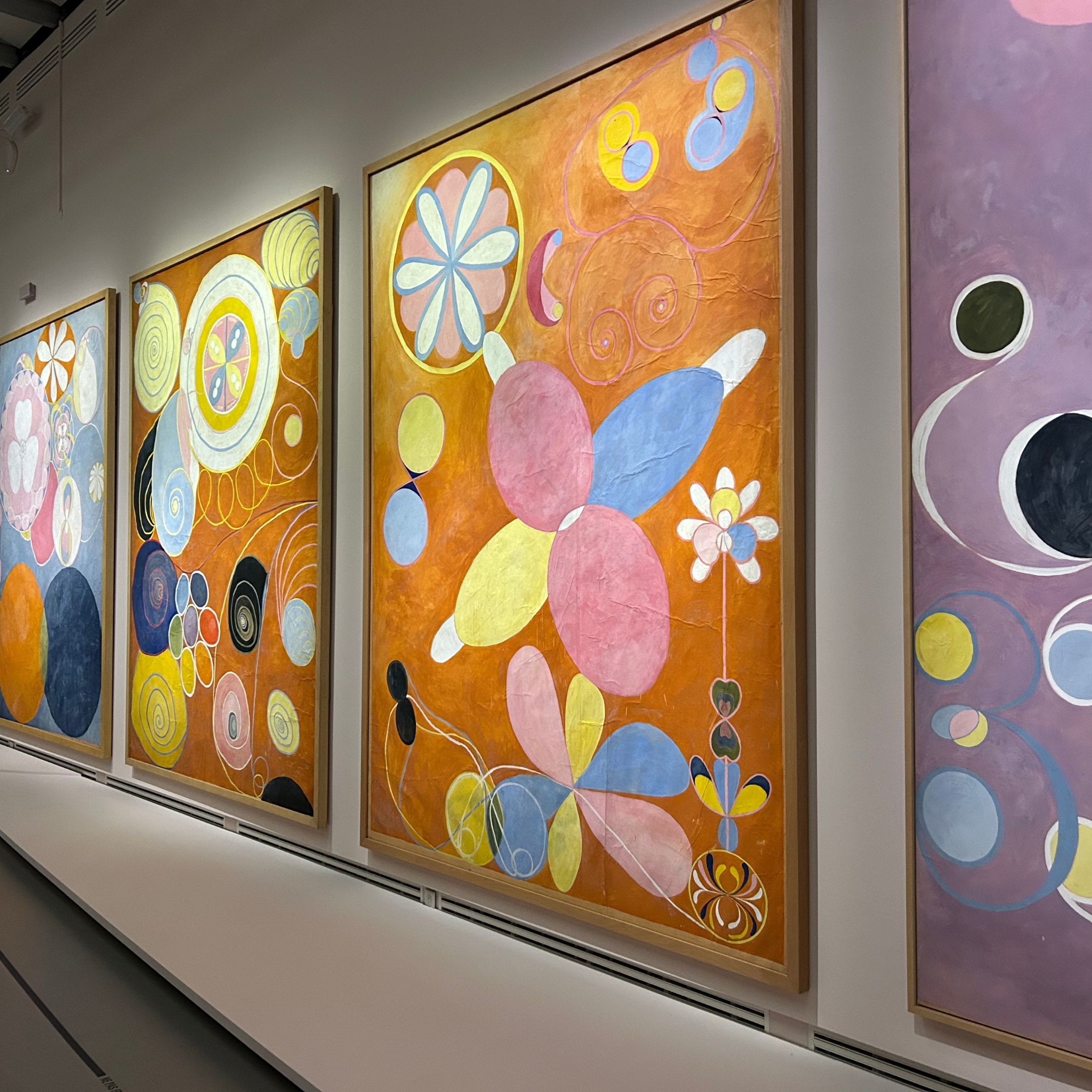
The heart of the exhibition is a visual shock of scale. The Paintings for the Temple, a monumental cycle created between 1906 and 1915, commands attention through both its sheer size and its mystery. The Ten Largest series represents its crowning achievement: these large-scale canvases, with their biomorphic forms and colours of almost tactile intensity, seem to belong to another century than the one in which they were painted. Oval shapes and spirals, fractured symmetries, esoteric nomenclature everything combines to transform each painting into an object of contemplation as much as an enigma.
The exhibition also weaves together the threads of a wide-ranging set of influences: Scandinavian folk art, the scientific culture of the late nineteenth century, and esoteric iconography. It also examines, with welcome acuity, the place long denied to women in the history of modern art.
An Extraordinary Life and Legacy
Perhaps the most striking dimension of this retrospective is biographical. Hilma af Klint had stipulated that her abstract works remain sealed for twenty years after her death. It was not until 1986, in Los Angeles, that the exhibition The Spiritual in Art finally revealed them to the public—nearly four decades after they were created, and forty years after the artist’s death. As the first solo exhibition devoted to her work in France, this Paris event corrects a historical oversight and restores to a pioneer the place she deserves.
This exhibition is not merely a discovery: it is a correction. Hilma af Klint painted the future unbeknownst to her contemporaries, in the chosen silence of a Stockholm studio. It took a century for the world to catch up with her vision.