There are 0 items in your cart. There is 1 item in your cart.
- FR
- EN


LOGIN / REGISTRATION Hello
ACCOUNT
WISHLIST

CART
Back

Éloi Schultz
- ARTWORKS
- STATEMENT
- PRESS
- Inspiration
- New


- New
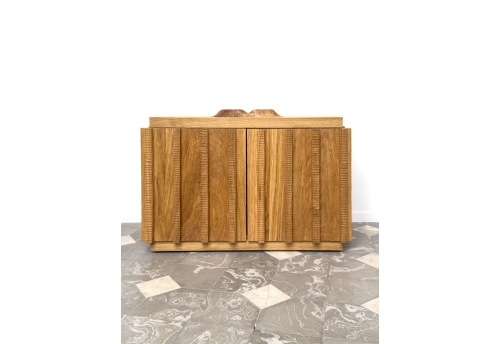


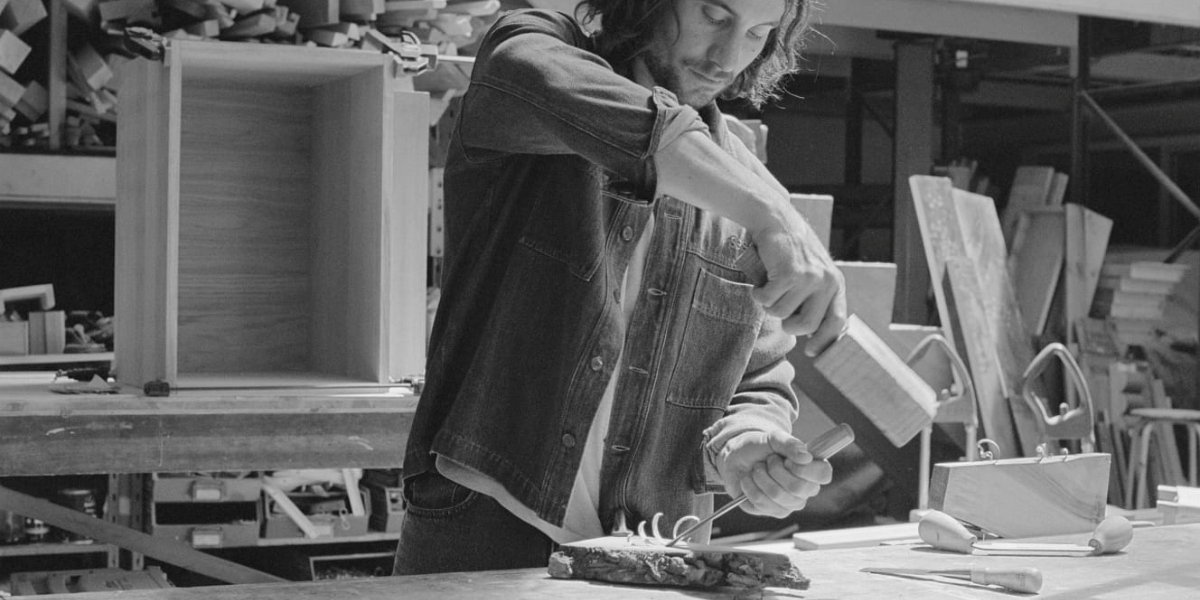
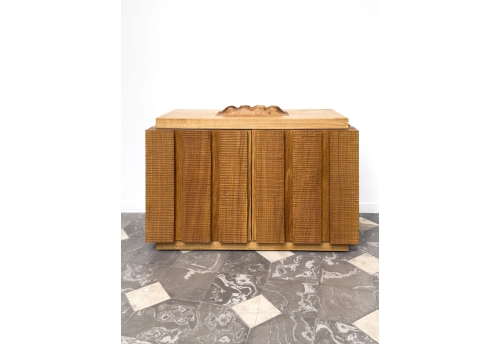
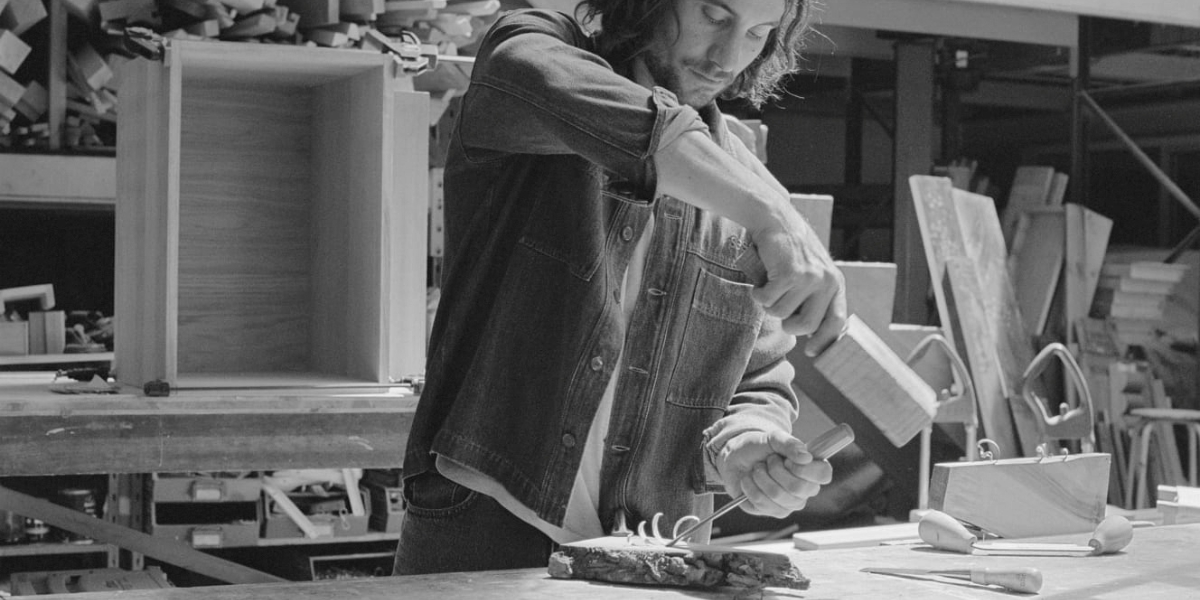
Éloi Schultz, an architect turned cabinetmaker-sculptor, has developed a plastic vocabulary where light reveals the contrasts and reliefs of wood. Inspired by the Arts and Crafts movement and masters like George Nakashima and JB Blunk, under whom he trained, he maintains an intimate and philosophical relationship with matter.
In his Marseille workshop, Schultz works exclusively with solid wood (pear, walnut, cedar, chestnut), letting his hand be guided by knots, cracks, and the natural grain. Rejecting industrial standardization and machines that smooth out matter, he favors hand tools to capture accident, tactile richness, and emotion. His joinery, drawn from global vernacular practices, testifies to a strong anthropological grounding, aiming to preserve the ingenious beauty of traditional techniques against their disappearance.
His work, influenced by the Japanese Mingei movement (folk craft), erects totemic silhouettes of an « uncanny strangeness. » By awakening the raw essence of wood, he creates a mystical link between nature, artistic gesture, and history, transforming each piece into a singular universal where the vernacular meets contemporary art.
- ... /
- Our Artists /
- Éloi Schultz