



Sheila Hicks & Monique Lévi-Strauss at the Quai Branly Museum
At the Quai Branly Museum, the exhibition dedicated to Sheila Hicks and Monique Lévi-Strauss opens like a landscape of materials and motifs where color becomes almost a language.
Nothing spectacular at first glance, and yet: something breathes, stretches, gently draws the visitor into a different rhythm.
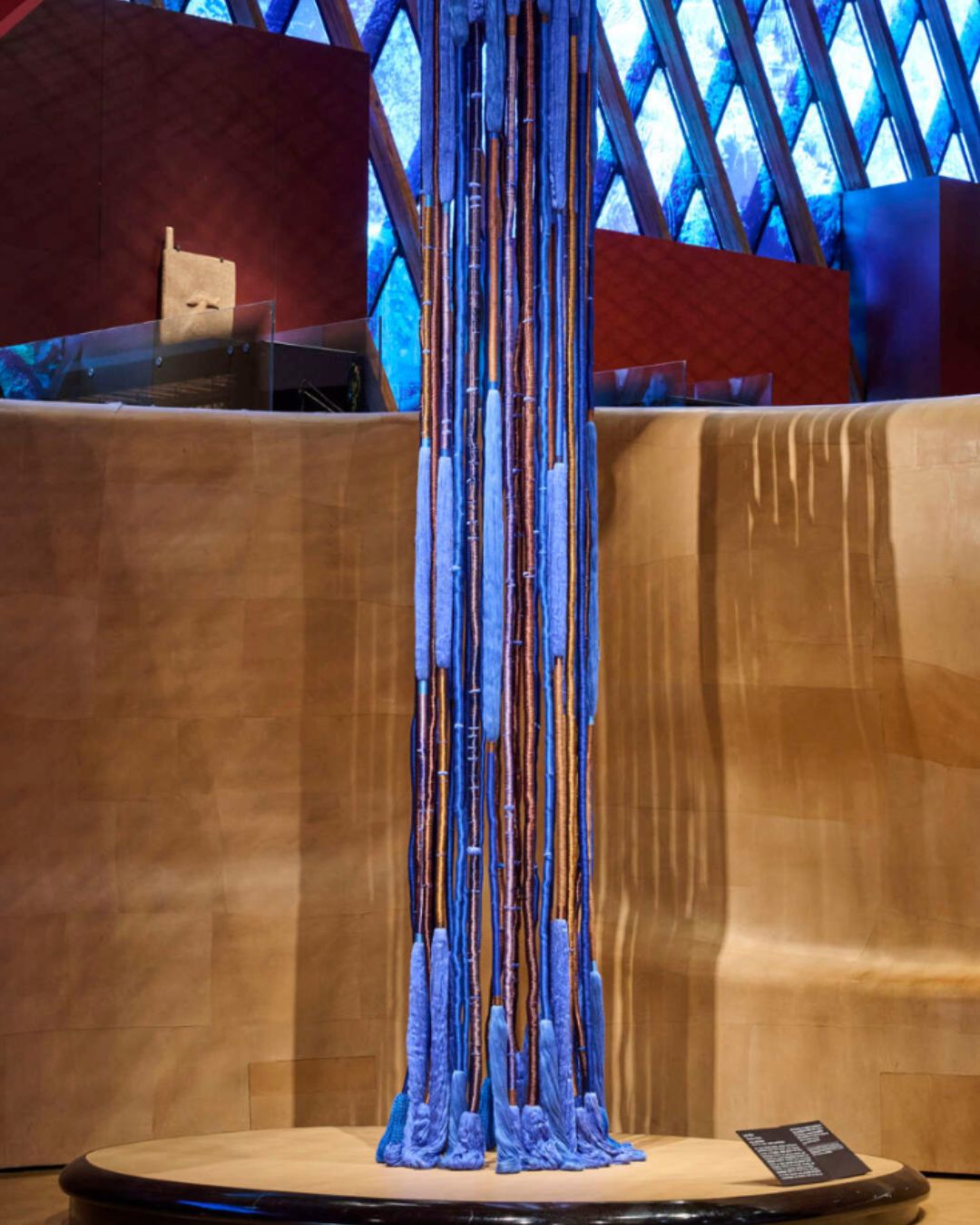
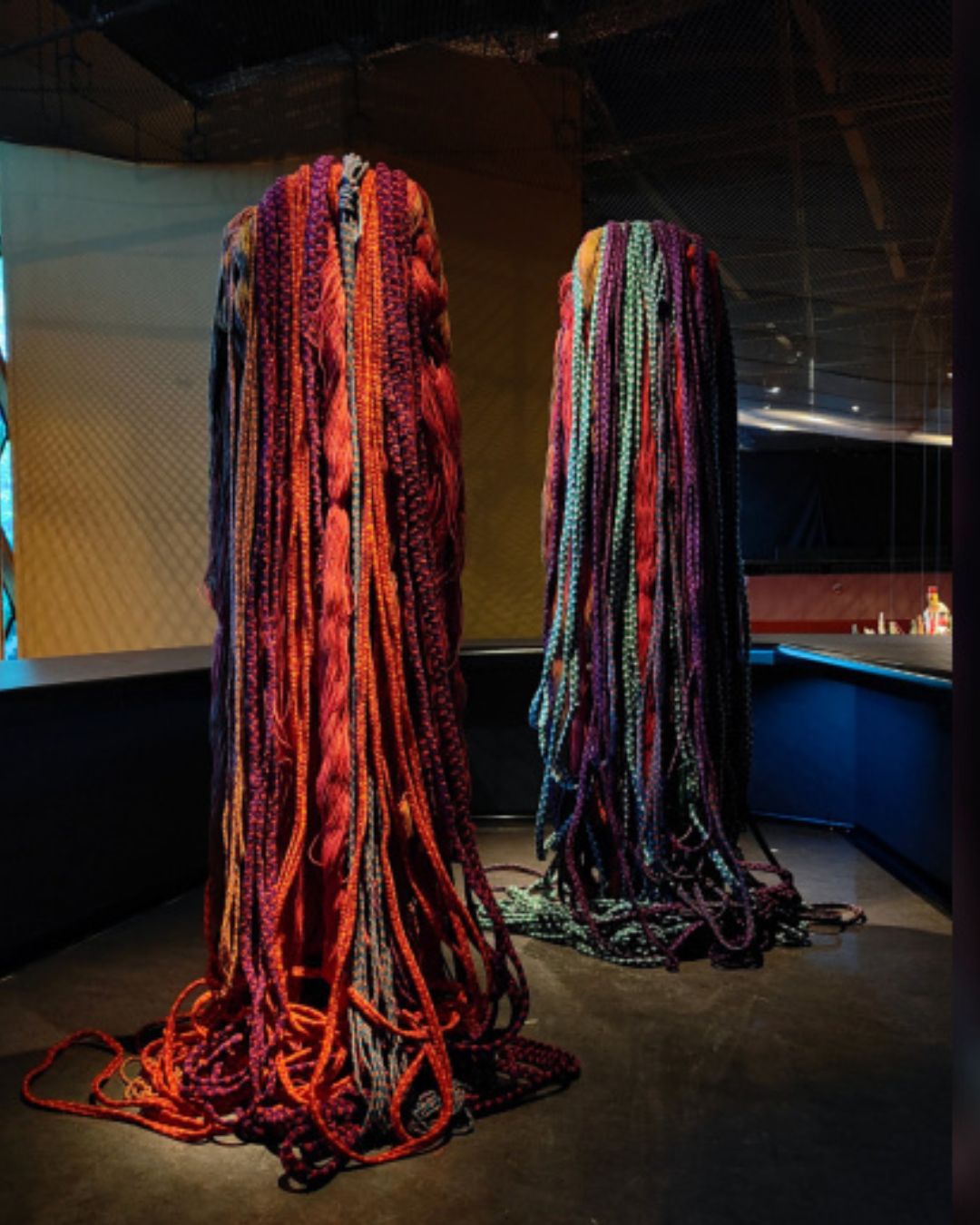
The rooms unfold like two parallel narratives. On one side, Sheila Hicks, the sculptor of thread, who transforms wool, linen, cotton, or silk into luminous volumes, supple cascades, thick cords that seem to grow into the space.
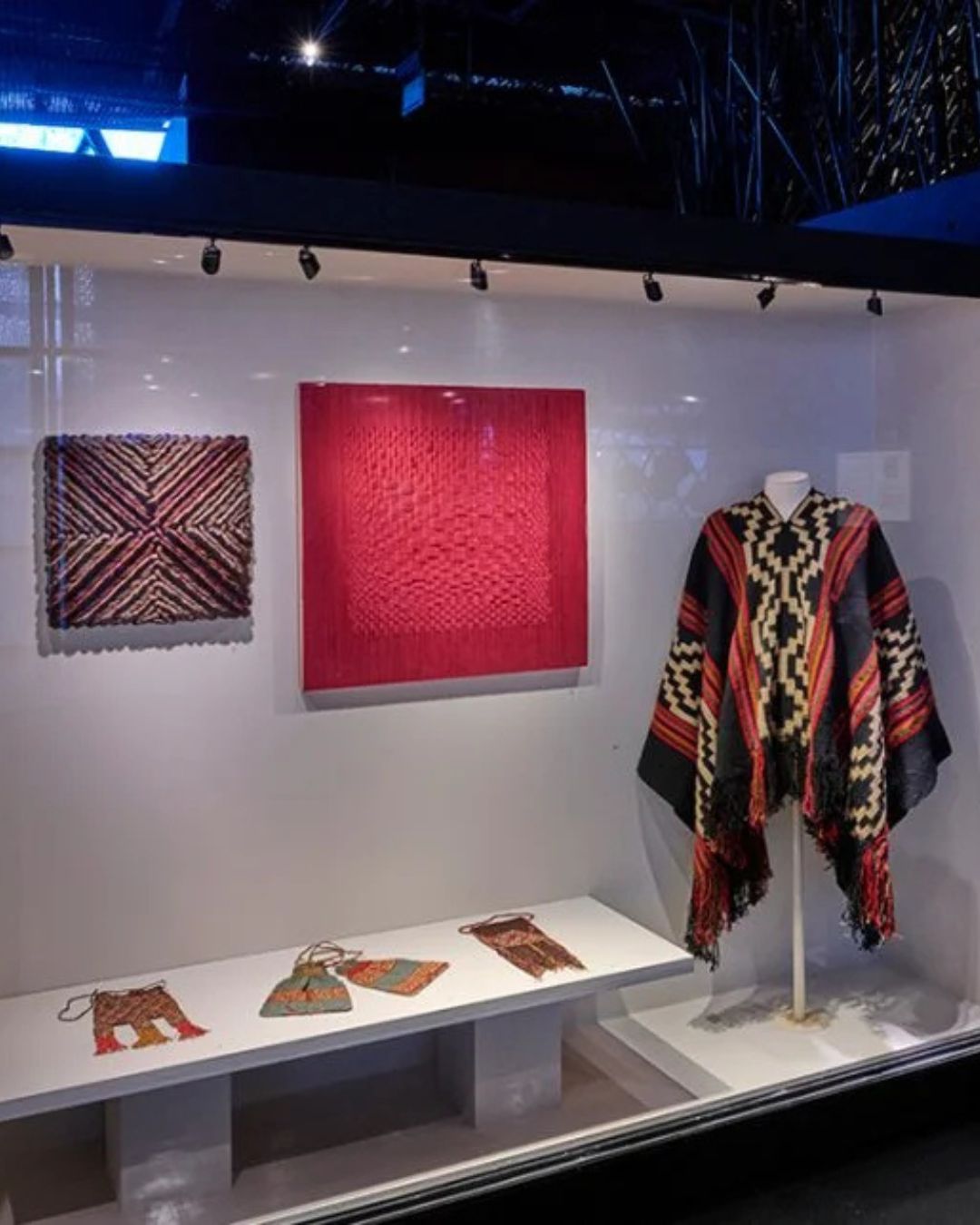
On the other, Monique Lévi-Strauss, a passionate researcher, whose collection of ikat those incredibly precise dyed and woven fabrics reveals a world of signs, know-how, and age-old gestures.
Between their works, a dialogue begins to emerge. Material seems to answer motif, today’s gesture converses with yesterday’s.
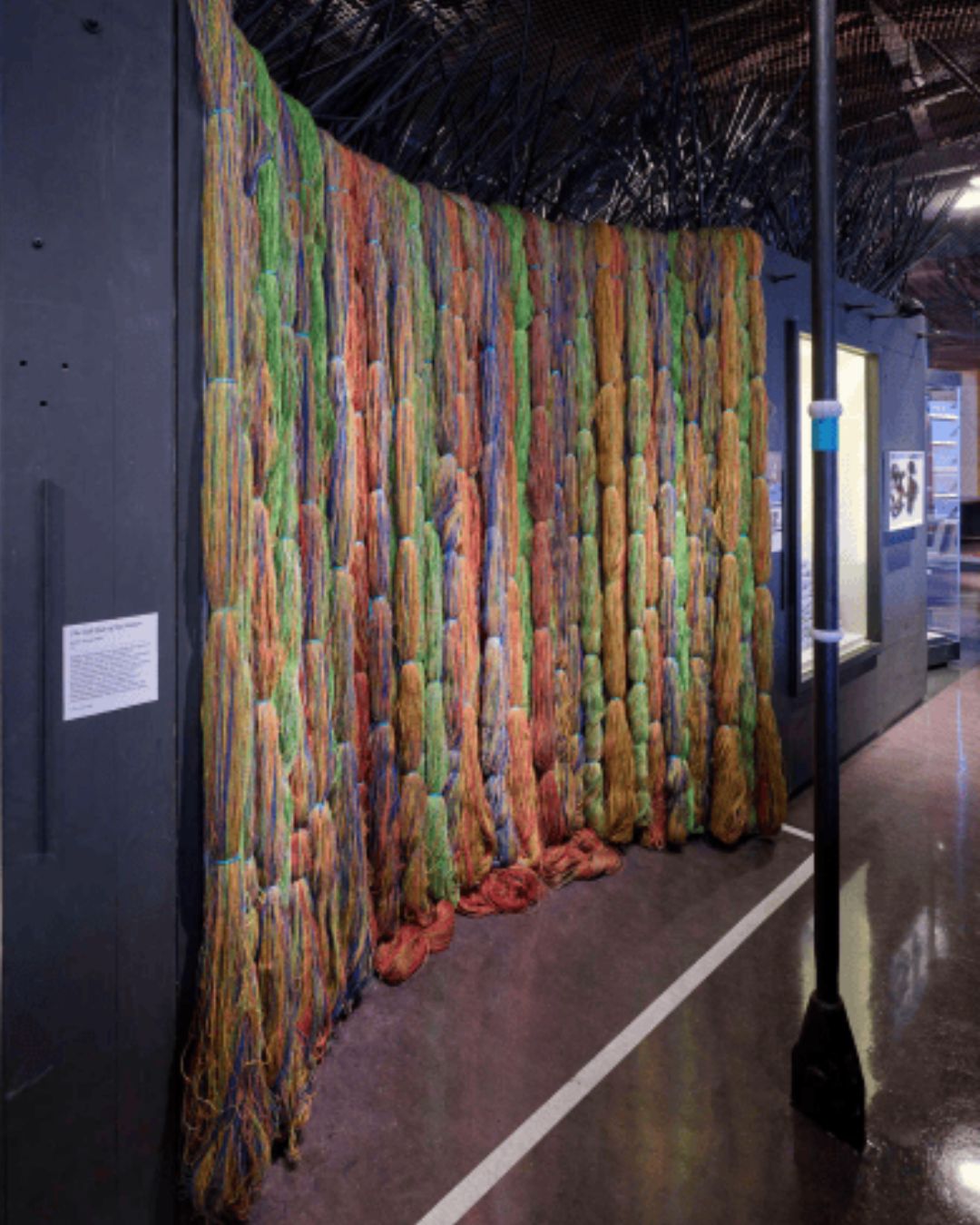
Lévi-Strauss’s textiles unfold their delicate vibrations, almost musical repetitions of blurred colors. Sheila Hicks’s pieces, meanwhile, overflow, coil, accumulate as if the fiber itself had decided to claim all the space.
You move through the rooms as if through an expanded studio. Here, a wall of ikat where the shades melt into one another; there, a mass of knotted, tightened threads that resembles a landscape as much as a sculpture.
One senses precise gestures, infinite patience, an intimate bond with material. Everything feels at once fragile and deeply solid.
Then comes that particular moment, the slowing down. The eye draws closer to a detail—one thread crossing another, a shade shifting ever so slightly.
It becomes clear that this exhibition speaks as much about textiles as it does about time. About all that we inherit, all that we transform. About the way hands transmit what words cannot say.
In a quieter room, the ikat motifs become almost inner landscapes. And just beside them, a work by Hicks rises like a vibrating column, a colored breath stretching from floor to ceiling.
Two worlds, two practices, yet a single idea: to look differently.
Upon leaving, the light at the Quai Branly feels strangely warmer, brighter. The fabrics, the fibers, the colors seem to linger a little in the air.
One carries with them this gentle memory: that of having walked through an exhibition that never forces anything, yet opens an unexpected space between art, craft, and the stories of the world.
A woven stroll, simple and profound, where the gaze itself becomes material.